Loading...
Scripture Readings
Deuteronomy 30:15-20
Luke 14:25-33
The Letter of Paul to Philemon
Text of Fr. Matt's Message
Most of our out of town travels take us to the East. We are either going to Tyler or even beyond Tyler to Deep East - almost Louisiana - Texas, or we are going to visit our babies who are now students in College Station and Waco.
There are basically three routes from which to choose, and the one I choose the least leads through Ballinger to Brownwood to Goldthwaite and then west on US 84 towards Waco.
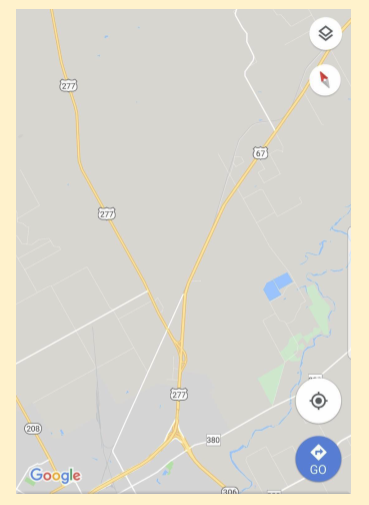
I choose this one the least because of the junction
where US 67 and US 277 divide. After seven years, I still have trouble at that junction because my mind tells me that Ballinger is off to the right, so my inclination is to stay right at that junction, which everyone here knows
takes you on toward Tennyson, Bronte,
and beyond that to either Sweetwater or Abilene. To go off to the right, you have to stay to the left. It’s all very counter-intuitive. Even when I make the correct choice, I still have that moment of “Am I On the Right Road” butterflies, and feel relieved when I see the sign that says I’m still on US 67.
I don’t know if you had to navigate any confusing road junctions to get here this morning, but today’s scriptures are full of junctions in the road.
In Deuteronomy 30 the people of Israel are nearing the end of the Exodus journey from slavery to freedom. They are in the land of Moab, on the eastern side of the Jordan River.
Moses is giving a final charge to Israel before he passes the mantle of leadership to Joshua,
sings his final song, joins the ancestors - Abraham, Isaac, and Jacob - in the great cloud of witnesses, and is laid to rest there in Moab.
Moses brings the Israelites to a key junction on their journey by imploring them to, “Choose life,” by loving the Lord your God, obeying him, keeping his commands, decrees, and laws.1 Moses knows that when they cross the Jordan they will encounter other people who worship other gods than the God of Israel, and Israel will be tempted to be drawn away to bow down to these other gods and worship them. In that historical period it was common to associate different gods with different lands, but part of the special calling of Israel was to magnify the Lord as the God of all people and places, who intends to bring blessing to all people and places through Israel’s faithful witness.
The exhortation to “choose life,” then, is for Israel, but also for the nations. If Israel chooses life by keeping covenant faithfulness, then the surrounding nations will see the goodness of God and will also choose the blessing of life God desires for all people.
As Jesus continues his journey to the cross in Luke 14, he brings those who would follow him to a critical junction by warning them to count the cost of following him. This is the only instance of the use of the word “cost” in the New Testament.2 It comes as a pressing appeal to consider what one is willing to give up in order to realize a goal, and what Jesus demands is that following him take precedence over even the bonds of family and the instinct for self-preservation.3
From a Roman prison, in a scene we were invited to enter into through dramatic presentation, St. Paul composes a letter to Philemon, whose house is the gathering place for the church in Colossae. In this letter Paul asks Philemon to grant freedom and welcome as a brother in Christ to one Onesimus. We do not know the exact circumstances, but it seems Onesimus, whose name means “useful,” was a slave who escaped from Philemon’s charge and may have taken some money or goods from him as he fled to Rome where he intended to become just a face in the crowd of the imperial city. Instead, by chance or by grace, Onesimus met Paul, who introduced him to King Jesus, the one who sets us free from every bond. The letter places both Onesimus and Philemon at an ethical crossroads that will be either an occasion of radical reconciliation in Christ4 or one of rejecting the example of Christ.
The choices offered in Deuteronomy and Luke are quite imperative. The choice is clear, a life and death decision with soteriological implications. The choice Paul offers to Philemon and Onesimus is more reflective, an exercise in Christian ethics. It is an opportunity for both to follow the example of Christ who, as Paul wrote in Philippians, “humbled himself and became obedient.” Onesimus can return in humility to Philemon, who in turn can embrace humility himself by giving up his rights, according to the laws of the day, to punish Onesimus. Slaves who ran away and were subsequently captured were commonly branded on the forehead with an “f” for “fugitvus,” or fugitive. But, Onesimus already has a brand on his forehead, the sign of the cross, whereby he is marked as Christ’s own for ever. We do not know what Philemon eventually decided, but if he were to truly call himself a follower of Christ, the choice is clear.
We all face choices. We come to junctions. Some junctions present the imperative choice, the choice to walk in God’s ways, to follow Christ as Lord, or to go by another way. Other junctions offer the more reflective choice, the kind that come with the gift of time to count the cost; the gift of space to listen to the voice of God in our deepest inner selves.5
When we come to those junctions it can be helpful to remember the one that leads us in the way we want to go, the way that follows the Christ way, the way that leads to blessing and life, is often the choice that at first feels counter-intuitive, like the wrong direction, but then, after that moment of “Am I on the right road” butterflies, we see that we are on the road of humility, obedience, and transformation into the likeness of Christ, and that is the road that takes us where we want to go.
The Rev. Matthew Rowe
✠ ✠ ✠
Notes
1 Dempsey, C. J. (2010). Theological Perspective on Deuteronomy 30:15‒20. In D. L. Bartlett & B. B. Taylor (Eds.), Feasting on the Word: Preaching the Revised Common Lectionary: Year A (Vol. 1, pp. 340–342). Louisville, KY: Westminster John Knox Press.
2 Townes, E. M. (2010). Theological Perspective. In D. L. Bartlett & B. B. Taylor (Eds.), Feasting on the Word: Preaching the Revised Common Lectionary: Year C (Vol. 4, p. 48). Louisville, KY: Westminster John Knox Press.
3 Raynal, C. E. (2010). Pastoral Perspective. In D. L. Bartlett & B. B. Taylor (Eds.), Feasting on the Word: Preaching the Revised Common Lectionary: Year C (Vol. 4, pp. 46–48). Louisville, KY: Westminster John Knox Press.
4 Johnson, E. E. (2010). Pastoral Perspective. In D. L. Bartlett & B. B. Taylor (Eds.), Feasting on the Word: Preaching the Revised Common Lectionary: Year C (Vol. 4, p. 42). Louisville, KY: Westminster John Knox Press.
5 Dempsey, C. J. (2010). Theological Perspective on Deuteronomy 30:15‒20. In D. L. Bartlett & B. B. Taylor (Eds.), Feasting on the Word: Preaching the Revised Common Lectionary: Year A (Vol. 1, pp. 340–342). Louisville, KY: Westminster John Knox Press.